Understanding Supermarket Layouts and Product Placement
Published February 2026 | Educational Article
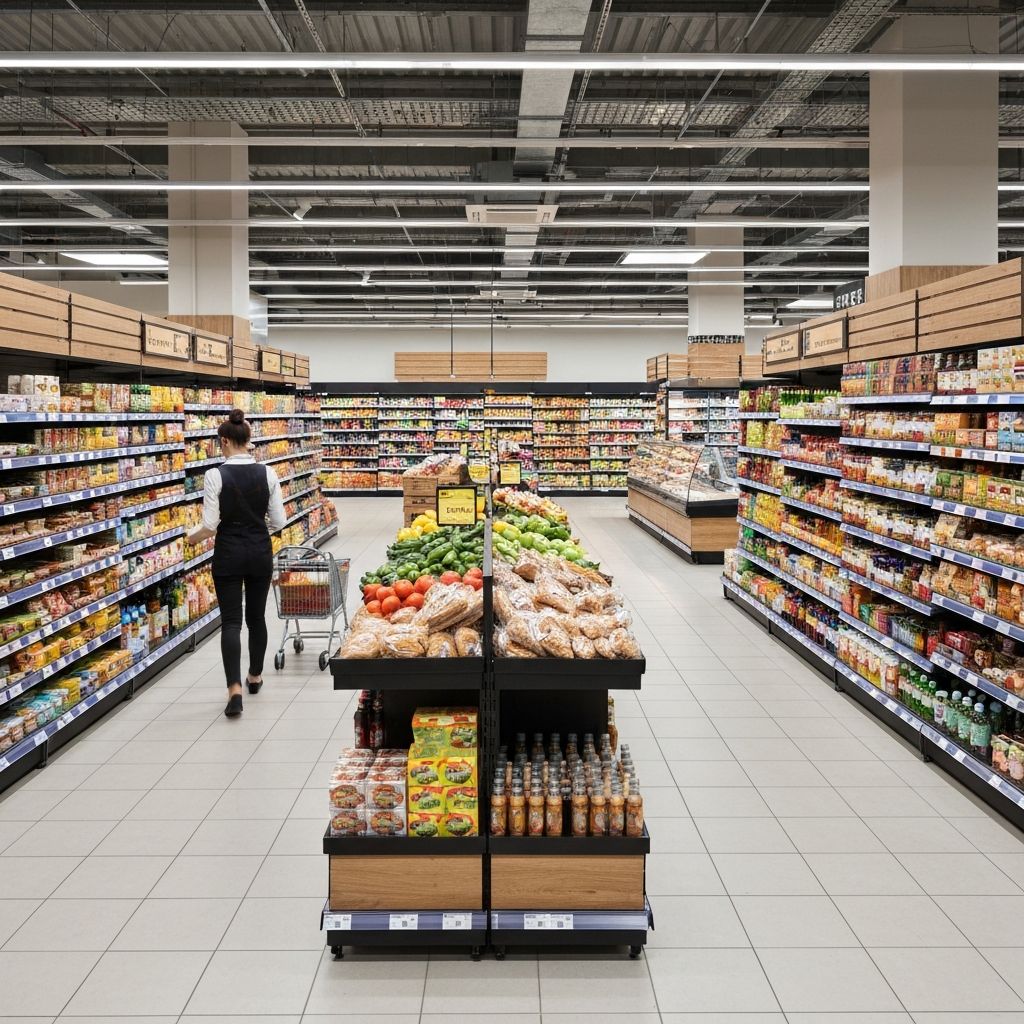
Introduction to Supermarket Organisation
Supermarkets in the United Kingdom follow various organisational patterns designed to facilitate customer navigation and product discovery. Understanding these patterns can provide useful context for anyone interested in how retail food environments are structured.
This article explores the typical layouts found in UK supermarkets, the principles behind product placement, and the general organisation of different food categories within the shopping environment. The information is presented from an educational perspective to explain observed patterns rather than to influence shopping behaviour.
Common Layout Patterns
Most supermarkets in the UK utilise what retail analysts describe as a perimeter-plus-aisles layout. Fresh food departments such as produce, bakery, dairy, and meat are typically positioned around the outer edges of the store, while packaged and shelf-stable products occupy the central aisles.
This arrangement reflects several practical considerations. Fresh products often require specialised refrigeration or display equipment that is more easily installed along walls. The perimeter placement also allows customers seeking primarily fresh items to complete their shopping without navigating the entire store.
The central aisles contain organised rows of shelving displaying packaged goods, canned products, dried foods, and other shelf-stable items. These aisles are typically labelled or numbered to assist with navigation.
Product Category Zones
Within the overall layout, supermarkets group related products together in distinct zones. The produce section concentrates fruits and vegetables. The dairy section brings together milk, cheese, yogurt, and related products. The bakery section contains bread, pastries, and baked goods.
These category zones serve practical purposes for both retailers and shoppers. Grouping similar products simplifies inventory management and allows shoppers to locate items by category without extensive searching.
The specific positioning of these zones varies between different supermarket chains and individual store formats. Larger supermarkets may have more extensive zones with greater product variety, while smaller convenience-format stores may combine categories more compactly.
Shelf Organisation Within Aisles
Within each aisle, products are organised according to various principles. Related items are placed near each other. For example, pasta sauces are positioned adjacent to dried pasta, and tea is located near coffee.
Vertical shelf positioning follows observable patterns. Products aimed at children are often placed at lower heights, while adult-oriented products occupy middle and upper shelves. Premium or specialty products may be positioned differently than standard offerings.
The arrangement of products on shelves reflects multiple factors including product size, packaging type, brand relationships, and promotional activities. These arrangements are not random but follow retail merchandising principles developed over decades of supermarket operation.
Promotional and Seasonal Displays
In addition to permanent shelf locations, supermarkets utilise temporary promotional displays positioned at aisle ends, in open floor spaces, or near checkout areas. These displays feature products on promotion, seasonal items, or new product introductions.
Seasonal variations in product placement reflect changing availability and demand patterns throughout the year. Fresh produce selections vary with growing seasons. Holiday-related products appear during relevant periods. Summer and winter product mixes differ in predictable ways.
These promotional and seasonal elements add a dynamic aspect to the otherwise stable supermarket layout, creating variation in the shopping environment over time.
Store Format Variations
Different supermarket formats employ different layout approaches. Large out-of-town hypermarkets may dedicate extensive floor space to each category, offering wide selections and incorporating non-food sections. High street supermarkets work within more constrained spaces, requiring more compact layouts. Convenience stores prioritise quick shopping trips with streamlined layouts focusing on frequently purchased items.
Each format serves different shopping occasions and customer needs. The layout of each format reflects its intended purpose within the broader retail landscape.
Navigation Aids
Supermarkets provide various aids to help customers navigate the space. Hanging signs indicate aisle categories. Floor markings may direct traffic flow. Some stores provide maps or directory boards near entrances. Larger stores sometimes offer digital apps that include store maps and product location features.
These navigation tools aim to reduce the time customers spend searching for items and to make the shopping experience more efficient, particularly in larger store formats where navigation can be more complex.
Checkout Area Organisation
The checkout area represents the final zone in the typical supermarket layout. Most stores position checkouts near the entrance, allowing customers to enter and exit through the same area. The checkout zone typically includes multiple till points to manage customer flow during busy periods.
Near checkout areas, small impulse-purchase items are commonly displayed. These include confectionery, magazines, batteries, and other compact products that shoppers might add to their baskets while queuing.
Understanding Layout Purpose
Supermarket layouts serve multiple purposes from a retail operations perspective. They facilitate inventory management and restocking. They influence shopping patterns and product exposure. They affect store capacity and customer flow. They reflect both practical necessities and strategic retail considerations.
From a customer perspective, understanding these layout patterns can provide context for the shopping environment. Recognising that fresh items typically occupy the perimeter, that promotional displays appear in specific locations, and that related products are grouped together can make navigation more intuitive.
Regional and Cultural Variations
While broad patterns exist across UK supermarkets, regional variations reflect local preferences and demographics. Stores in areas with significant populations from particular cultural backgrounds may dedicate more space to relevant product categories. Coastal areas might have more extensive fresh fish sections. Rural stores might emphasise local produce.
These variations demonstrate how supermarket layouts adapt to serve diverse customer bases across different parts of the United Kingdom.
Evolution of Supermarket Design
Supermarket layouts have evolved over the decades since self-service grocery shopping became widespread in the mid-20th century. Early supermarkets were simpler and smaller. Contemporary stores are larger and more complex, offering wider product ranges and incorporating new sections like pharmacies, clothing areas, or food service counters.
Recent years have seen some evolution toward more experience-oriented design elements, with some stores emphasising food-to-go sections, in-store bakeries with visible production areas, and specialty counters offering personalised service for items like cheese or deli products.
Conclusion
Supermarket layouts represent a complex interplay of practical retail requirements, customer navigation needs, and merchandising principles. Understanding these layouts provides educational context for how food retail environments are organised in the United Kingdom.
The patterns described in this article are general observations about common practices in UK supermarkets. Individual stores will vary in their specific implementations, and layouts continue to evolve as retail practices develop.
This information is provided purely for educational purposes to explain how supermarkets organise their spaces and position products. It does not constitute advice about shopping behaviour or product selection.
Educational Content Notice
This article provides educational information about supermarket layouts and product organisation. It does not constitute shopping advice or recommendations.
Individual shopping patterns and needs vary significantly. This information is presented to explain retail environments, not to influence shopping behaviour.